Sanctuary AI Phoenix Robot Cognitive Architecture
Software architecture, not hardware design, determines whether humanoid robots can do reliable work.
Phoenix’s defining innovation is Carbon, Sanctuary AI’s cognitive architecture for translating natural language instructions into physical work. By bringing together symbolic reasoning, language models, deep learning, and reinforcement learning, it puts explicit planning and auditability at the heart of the design. Understanding that design explains Phoenix’s place in humanoid robotics, but its commercial value depends on evidence of reliable work beyond supervised pilots.
Why the humanoid race is being decided at the software layer, not the chassis
The commercial bottleneck in humanoid robotics has shifted from demonstrating locomotion to performing reliable, general-purpose work. Walking speed, payload, and price describe important physical and economic constraints, but they do not establish whether a robot can handle variability on a factory floor. That requires more than a capable chassis. The control system must interpret a task, organize actions, and respond to changing conditions without losing the purpose of the instruction. Sanctuary AI’s Phoenix announcement makes this priority explicit by describing Carbon as “the real star of the show.”
What Carbon is and what it is designed to do
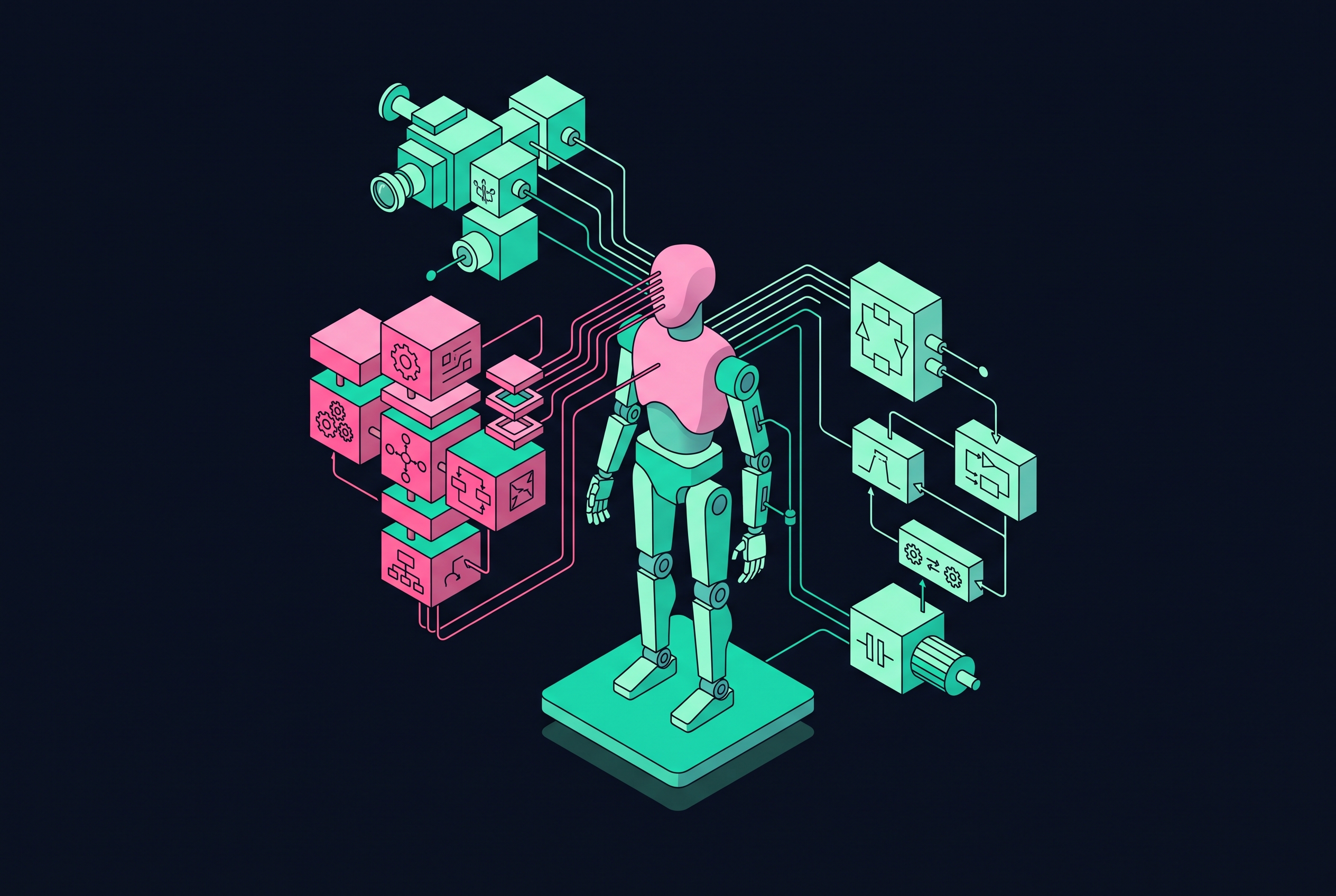
Sanctuary’s announcement defines Carbon as an interconnected AI control system. It uses symbolic and logical reasoning to plan and make decisions, large language models to understand instructions, deep learning for perception, and reinforcement learning to improve behavior through experience. Each component has a different functional responsibility. Their shared purpose is to connect an instruction expressed in ordinary language to a sequence of physical actions that accomplishes the requested task. The design intent is human-like intelligence for general-purpose work.
Sanctuary also describes explainable and auditable reasoning, task, and motion plans as core features of Carbon. Transparency is part of the intended architecture. An explicit plan provides something that can be inspected, rather than leaving the relationship between an instruction and an action entirely inside a learned model. That design allows people to take part at several levels, including direct pilot, pilot-assist, and supervised autonomy. These modes describe a spectrum of control, so the presence of Carbon does not by itself establish that Phoenix is acting autonomously.
How the four components of Carbon work together to process a task
Large language models first read an instruction and match it to the robot’s task vocabulary, so a person can ask for work without programming each movement. Symbolic and logical reasoning then turns that interpretation into an explicit sequence of sub-actions. The plan makes the intended sequence inspectable. During execution, deep learning handles perception from vision, touch, and proprioception, feeding information back into the plan as physical conditions change. Reinforcement learning uses what happened after each action to update behavioral policies as the robot gains more experience.
A hypothetical retail task shows how the work would be split between the components. An instruction to move an item would first need to be understood as a task. Planning would organize the physical steps needed to complete it, while perception would provide information about the object and the robot’s interaction with it. Execution is therefore not separate from sensing. The learning stage would use the results of those actions to improve how the robot works the next time.
The components are integrated through these dependencies. The symbolic layer gives reasoning and motion plans an explicit representation so they can be logged, reviewed, and audited. That is a specific form of explainability. It makes the proposed course of action accessible, although the existence of an auditable plan does not itself prove that every physical action will succeed.
How the Phoenix hardware is built to serve Carbon's requirements
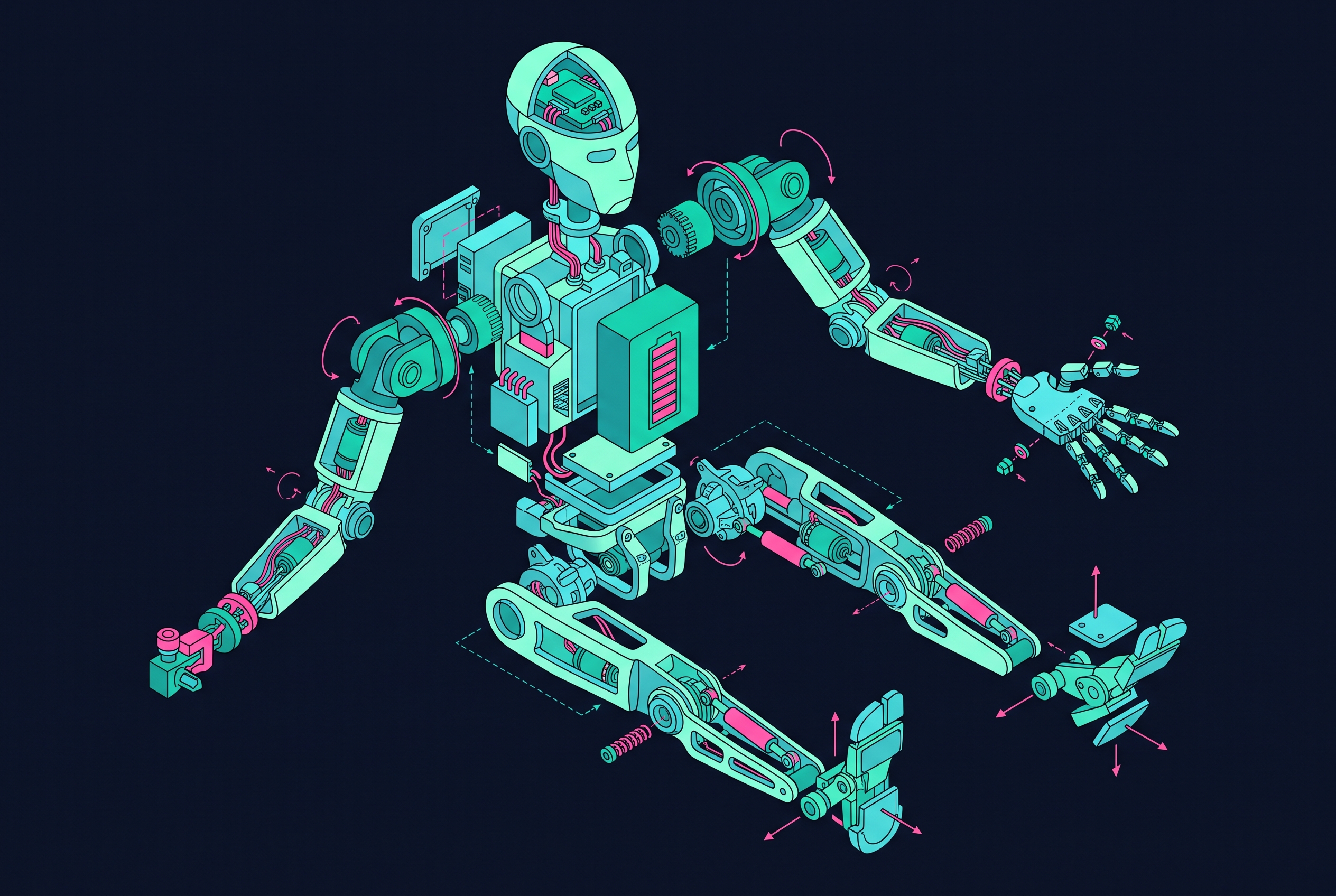
Phoenix’s physical design supplies the sensing and actuation that Carbon needs to learn from and act on its surroundings. The current generation’s wheeled base reflects customer feedback favoring stability and predictability for the targeted factory tasks over bipedal locomotion. The choice follows the work being targeted. It also keeps the software-first argument grounded, because an architecture for physical work needs a body suited to the conditions in which customers expect it to operate. Locomotion is one requirement among others.
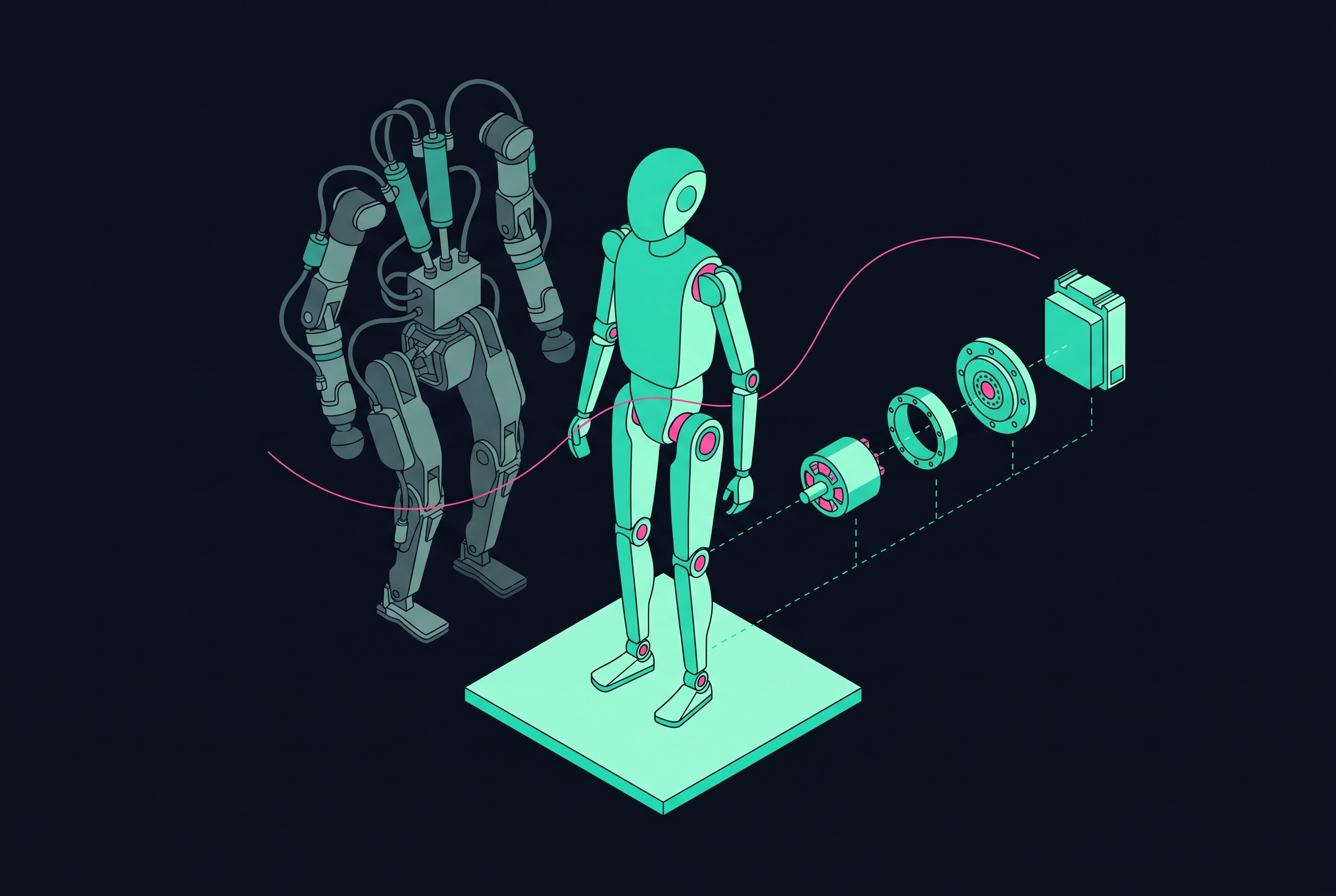
The hands show more directly how the hardware works with cognition. Each has 20 degrees of freedom, driven by miniature hydraulic valve actuators, with tactile sensitivity reaching 5 millinewtons. Touch supports slippage detection and force control, while integrated tactile sensors allow handling when an object is partially occluded. This is especially relevant to assembly work, where camera sight lines can be blocked. Sanctuary’s stated ambition to make Phoenix “the most sensor-rich and physically capable humanoid ever built” therefore serves a defined purpose, which is to give Carbon the physical feedback and control needed for a broad range of tasks.
How teleoperation converts human skill into robot autonomy
Teleoperation is the main way Carbon learns what it needs to do a task, as well as a fallback when autonomy fails. Human demonstrations provide examples from which the system identifies patterns and develops reusable action primitives. These primitives form a repertoire of skills. The intended benefit is that they can be recombined for new tasks rather than requiring every task to be learned from scratch.
Physics-realistic and photo-realistic environments allow parallel training runs, compressing the time needed to develop robust policies before deployment. The goal is still task-class autonomy once the robot has learned from enough demonstrations. Simulation and teleoperation are therefore parts of a designed transition, rather than evidence that the robot must remain remotely controlled indefinitely. Whether that transition has occurred for a particular task, however, is an empirical question.
This creates a legitimate challenge for outside assessment. When a robot completes a physical demonstration, it may look much the same under direct control, with assistance, or with supervised autonomy. The training value of teleoperation and the evidential limits of a teleoperated demonstration can both be acknowledged without contradiction. The former explains how Carbon acquires skills, while the latter limits what a viewer can infer about independent performance.
What the real-world deployments reveal about Carbon's current capabilities and limits
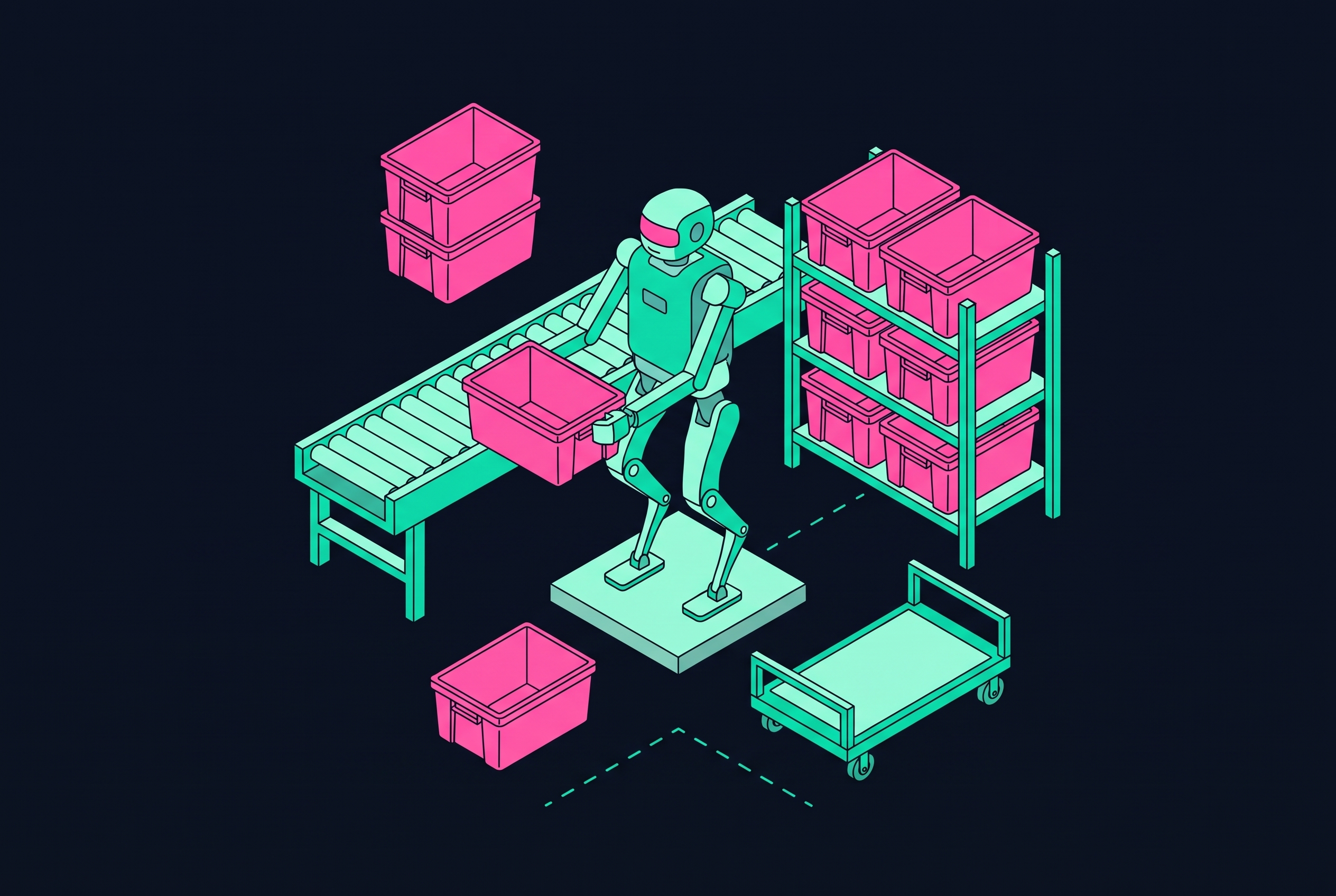
The best-documented pilot was a one-week trial at a Mark’s clothing store in British Columbia, where Phoenix performed a range of retail tasks. This places the architecture in a real workplace rather than only a training environment. It was nevertheless a constrained, supervised trial. The deployment record described to date consists of pilots, so it supports claims of early task performance more directly than claims of established production reliability. Those are different levels of evidence.
Sanctuary’s deployment framing emphasizes task completion counts and success rates, but does not always disclose the degree of human involvement in a given demonstration. That limits the interpretation of successful outcomes. Completion establishes that the robot system, including whatever assistance was present, performed the task. It does not necessarily establish that Carbon could repeat the work independently over a sustained operating period.
How Carbon's hybrid approach differs from the end-to-end vision-language-action models it competes against
End-to-end vision-language-action models use a single large neural network trained at scale to turn text, images, and often robot state into motor actions. This compresses the perception-to-action pathway into one learned system. Carbon preserves a different division of responsibility. Its symbolic reasoning, language understanding, deep learning, and reinforcement learning each have their own role but work together within an explicit architecture. Both approaches use neural learning, but they differ in how they link perception, reasoning, and action.
VLA systems offer streamlined perception-to-action pathways and have demonstrated advantages on standard benchmarks. Their difficulty lies in isolating where reasoning errors originate within the combined system. Carbon’s explicit planning layer gives it a different way to trace errors. Sanctuary argues that this layer prevents the equivalent of “hallucinations” in physical motion, making auditability part of its safety case as well as its capability case. That remains an architectural argument, however, rather than a substitute for comparative evidence of safe execution.
The technical debate is not settled by either benchmark performance or interpretability alone. End-to-end systems do better on benchmarks, while cognitive architectures have strengths in interpretability and long-horizon planning that standard tests have a harder time measuring. These benefits address different evaluation needs. A transparent plan can help explain an intended action, but its usefulness still depends on the robot completing the task reliably.
How funding constraints and the 2026 leadership change are reshaping what Carbon has to prove
Sanctuary has raised substantially less capital than its best-funded American rivals, making the cost and pace of commercialization central to Carbon’s future. Its partnership with Magna partly responds to that constraint by linking manufacturing scale-up with Sanctuary’s AI and platform design. Capital shapes the route to deployment. The Canadian government’s Strategic Innovation Fund contribution, confirmed as of November 2022, provided meaningful runway but did not close the fundraising gap.
In November 2024, Sanctuary’s board removed co-founder and CEO Geordie Rose, and a number of employees were laid off. No official reason was publicly stated for his removal. In January 2025, the company raised a US$10 million convertible note to fund operations through the fiscal year. That financing showed the pressure to keep the company funded. These events establish the organizational and financial setting for the subsequent commercial shift, without establishing a technical verdict on Carbon or an official explanation for the board’s decision.
In June 2026, Sanctuary named Daniel Friedmann as CEO after he had spent many years leading aerospace firm MDA and later Carbon Engineering. The accompanying pivot includes commercializing existing technology at scale and deploying Carbon as standalone Physical AI software. This broadens the product beyond the Phoenix chassis. It also changes the architecture’s immediate burden of proof, because commercial deployment and sales now take precedence over continued R&D-led architecture development. Technical differentiation must support a product that can be delivered economically.
What Carbon's architecture needs to demonstrate to confirm its place in humanoid robotics
Carbon has a coherent architectural logic and a record of early real-world task performance, but no public empirical comparison against VLA competitors on the same tasks. That is the central technical evidence gap. Explainability, auditability, and hybrid reasoning give reasons to consider the approach, but they leave its rank against alternatives under the same conditions unproven. A published comparison on standardized manipulation tasks would advance the case beyond architectural descriptions. It would give the competing claims a common empirical basis.
Friedmann’s scaling mandate adds a separate commercial test that a research comparison alone cannot satisfy. Sustained deployments in automotive lines, logistics facilities, or comparable constrained-but-real settings must show whether Carbon can generalize across task classes, handle new instructions without retraining, and preserve auditability under factory conditions. The economics must work as well. Success on those terms would substantiate the hybrid architecture thesis, while failure could concede the commercial round to VLA systems even if the academic debate remained open.
Can Carbon turn its explicit, auditable plans into sustained, economically deployable work without depending on renewed human instruction for each new task?